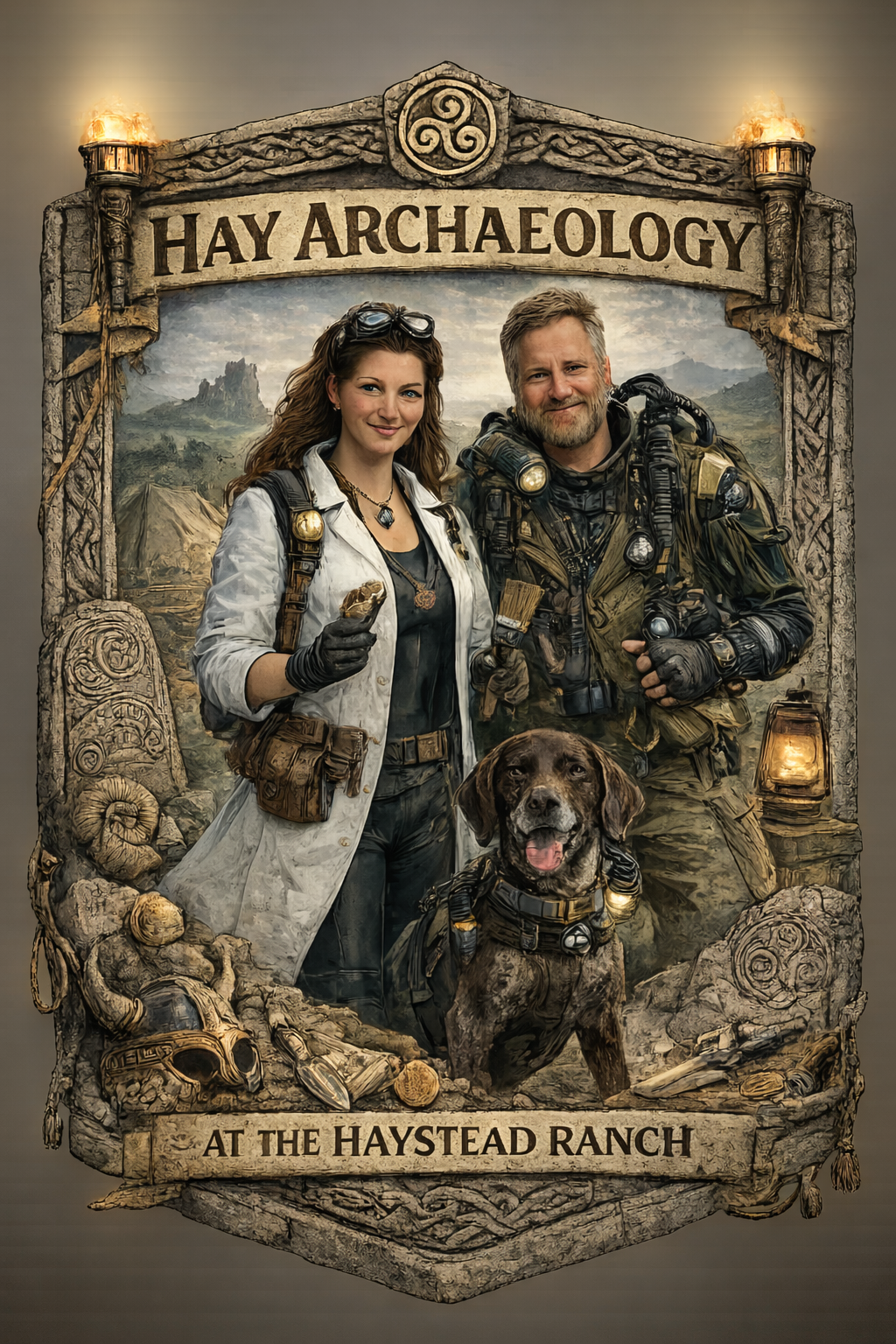
Hay Archaeology
(Yeah… H-A-Y. What the hell … it works.)
Welcome to Hay Archaeology — and yeah, before you ask… it’s H-A-Y.
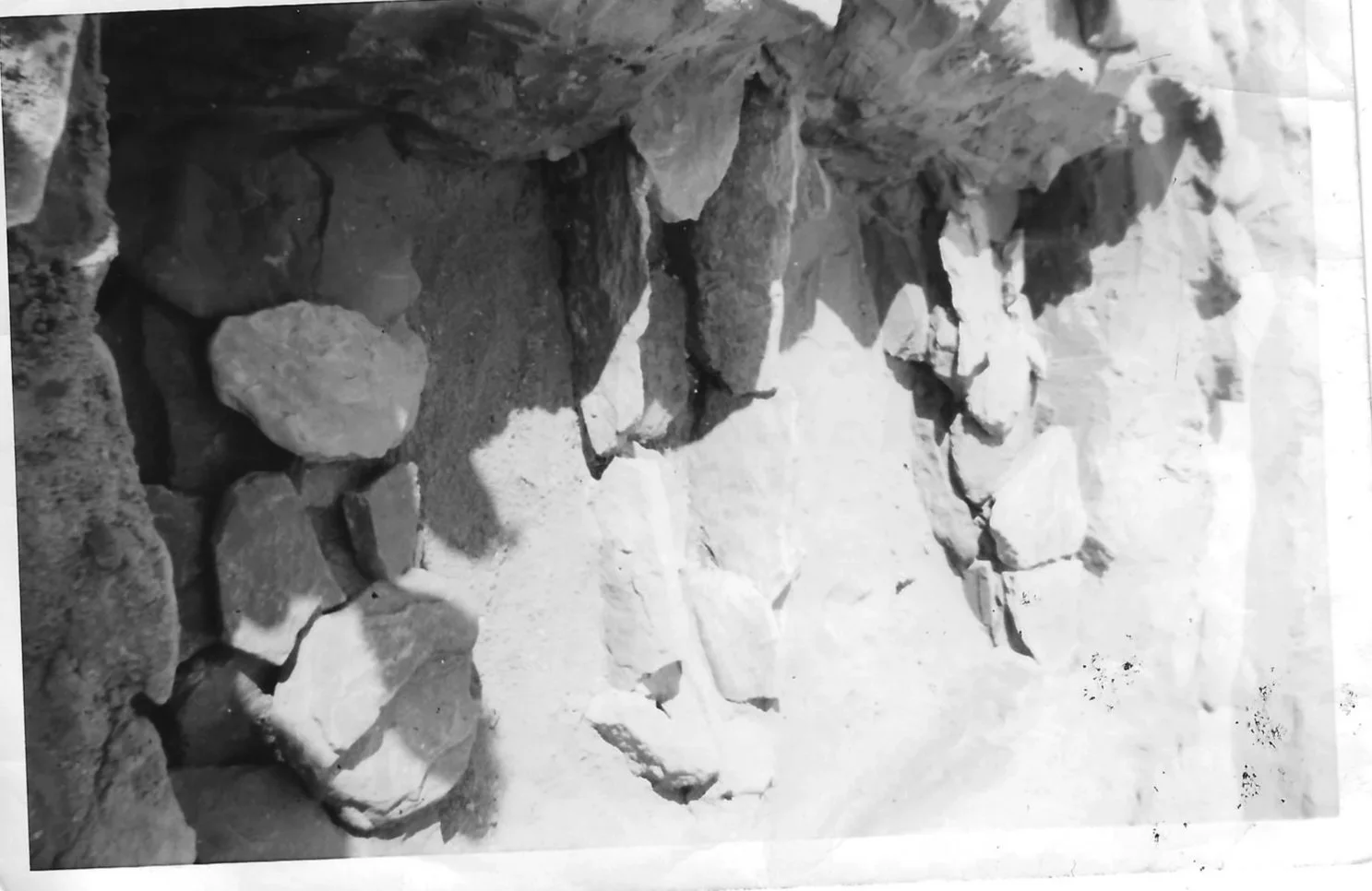
This page is where history, heritage, and hands on science come together. At its core is something deeply personal to us: a black-and-white photograph from an early Pictish excavation at Lundin Links in Fife , taken by family, tied directly to our bloodline. That connection isn’t abstract. It’s real., and it’s one of the reasons this page exists at all.
For us, archaeology isn’t just about uncovering the past — it’s about understanding who we are, where we come from, and how those stories still shape the present.
Laura and I share a deep interest in the world of the Picts, the Scottish Highlands, and the enduring legacy of Norse and Viking cultures. Especially those tied to Laura’s German and Danish roots. These are not just topics we read about; they are influences we actively explore, test, and live through our work at Haystead.
🌾 Living History — Not Just Studying It
At Haystead Ranch, archaeology doesn’t sit on a shelf , it’s something we actually do.
We experiment with Viking-style and early agricultural practices, exploring how ancient people worked the land and how those methods can still apply today. Farming is at the heart of everything we do, and archaeology gives us a way to reconnect with the origins of that work.
Here, you’ll find:
Reconstructed historical recipes, including traditional Viking-era dishes
Hands-on experimental archaeology projects
Practical insights into ancient farming and sustainable living
Real-world trials of historical methods applied in modern conditions
Because sometimes the best way to understand history… is to live it.
🧬 DNA, Science, and the Truth of the Past
Our work doesn’t stop in the field, it extends into the lab.
Through DNA analysis, biochemistry, and archaeological research, we explore what modern science is revealing about ancient populations. A particular focus is placed on the peoples of the Scottish Highlands and the Pictish kingdoms.
By connecting genetic evidence with archaeological findings, we aim to better understand migration, ancestry, and identity grounding history not just in theory, but in measurable, scientific reality.
🦖 From Ancient Kingdoms to Deep Time
And because this is Haystead, and because Doctor Laura wouldn’t allow it any other way,
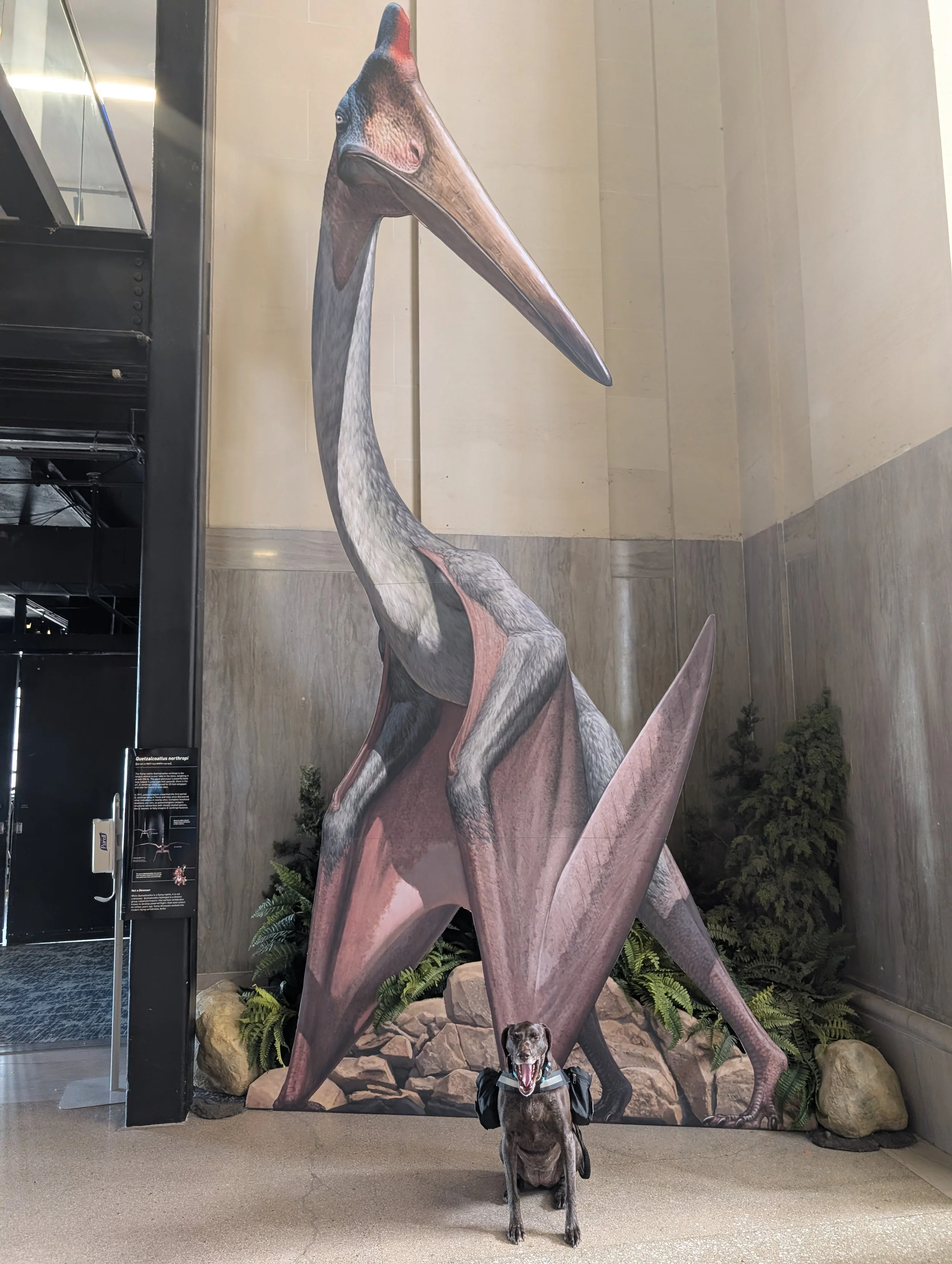
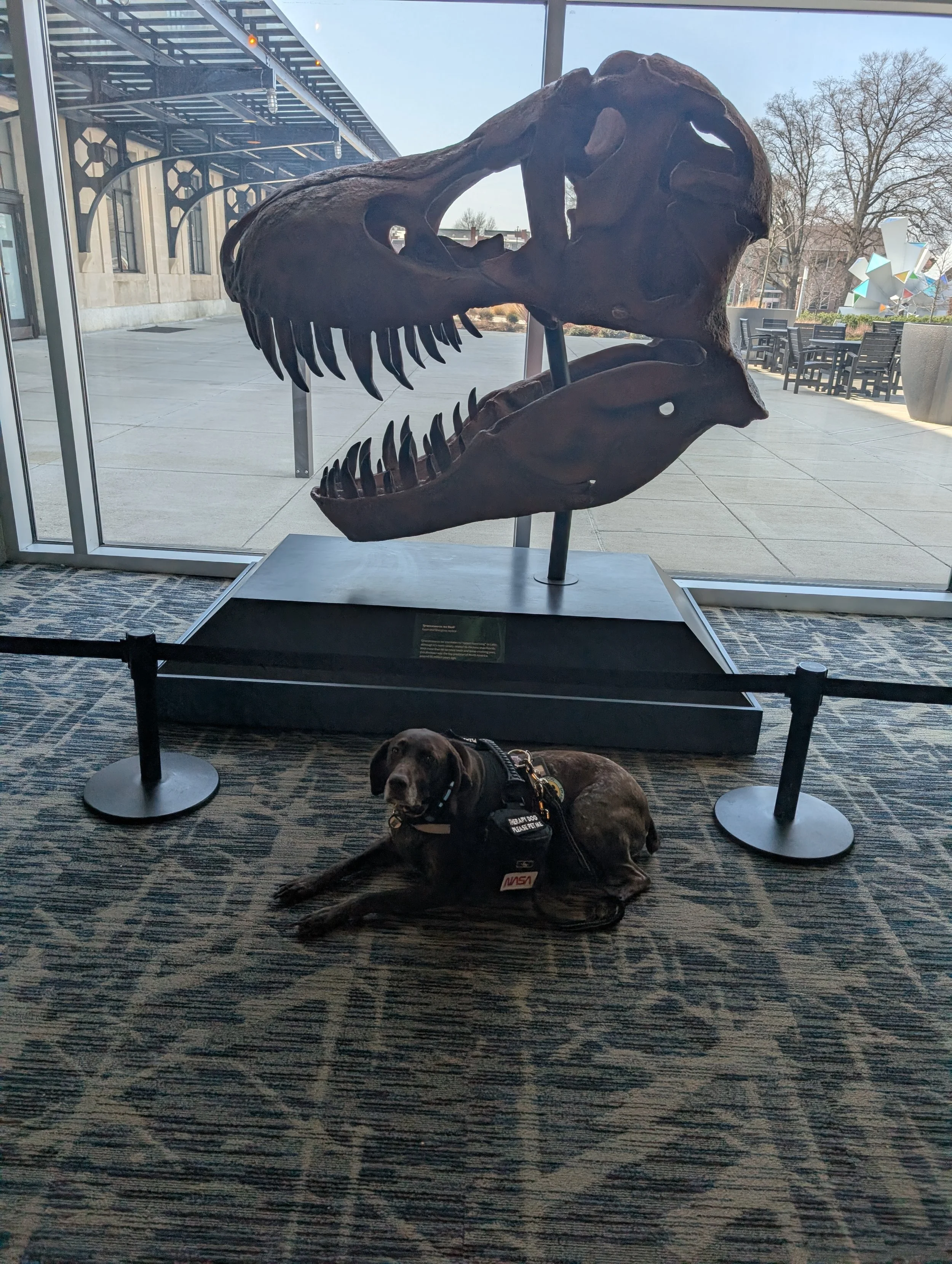
there will absolutely be dinosaurs!
From fossil excavation to paleontology research, this page expands beyond human history into the deep past. Archaeology, in its broadest sense, is the study of life across time, and that story begins long before us.
🔬 What’s Coming
Hey Archaeology is an evolving project. As our work continues, this page will grow to include:
Field logs and research updates
Experimental archaeology and farming trials
Historical cooking and cultural reconstructions
DNA and ancestry studies
Deep dives into Pictish, Highland, and Viking history
Paleontology features and dinosaur research
🛡️ Our Words to the Past
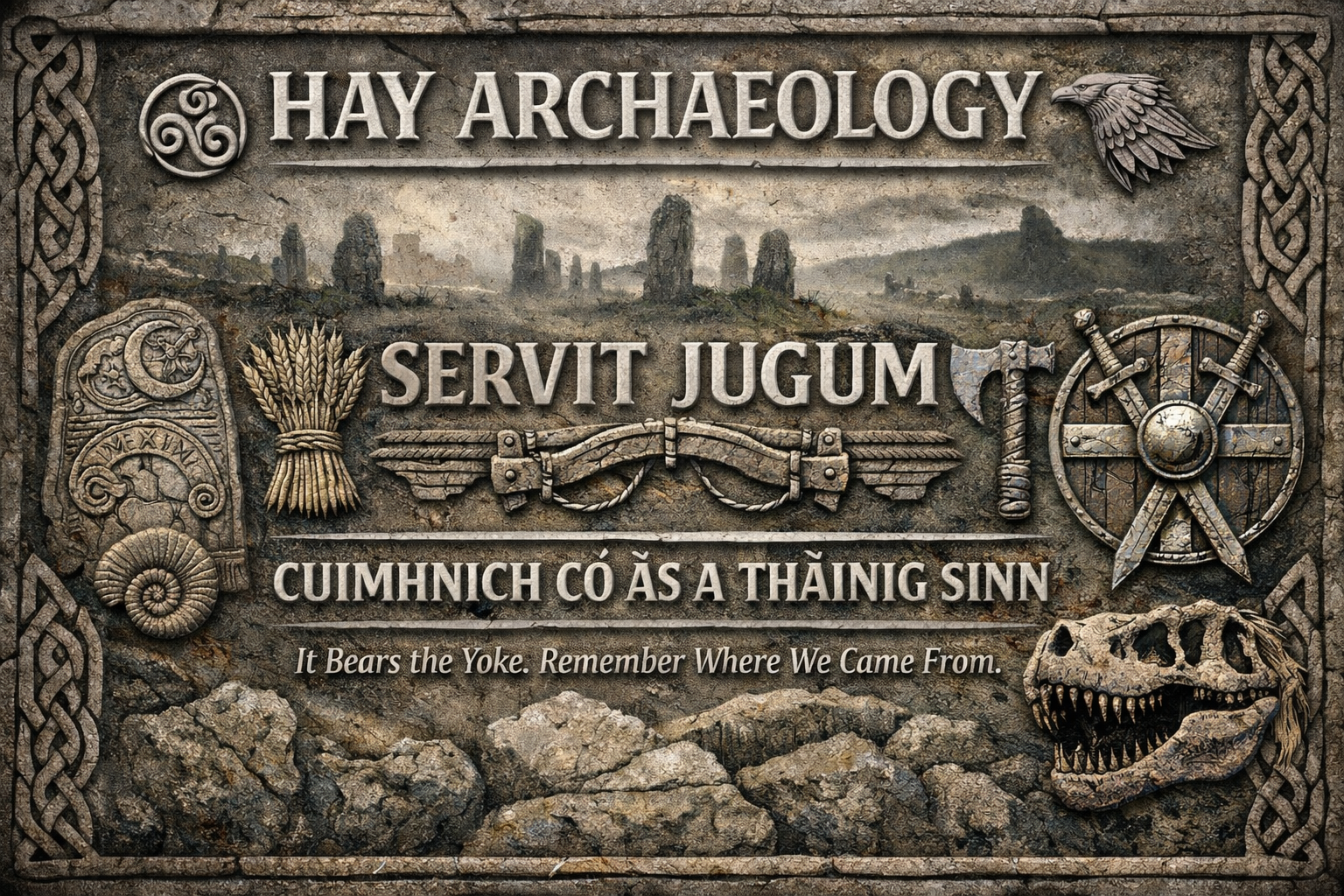
Servit Jugum
It bears the yoke.
“Cuimhnich cò às a thàinig sinn.”
Remember where we came from.
🛡️ Our Mission
To take archaeology out of the museum and put it back where it belongs —
in the soil, in the field, and in real life.
To explore the past through science, heritage, and hands-on work,
and to carry forward the understanding that history is not gone
it is something we still live every day.
“Archaeology is the search for fact, not truth.”
Indiana Jones
“The archaeologist is digging up, not things, but people.”
Mortimer Wheeler

Pictish Dish Hearth Skause
Haystead Archaeological Kitchen Series
📜 Project Overview
This recipe represents a Pictish-era (Iron Age–Early Medieval Scotland) hearth stew, reconstructed from archaeological evidence and environmental availability. While no written recipes survive, evidence strongly supports a diet centered on barley, sheep, root vegetables, and foraged plants.
This version reflects a Haystead field adaptation, incorporating ingredients consistent with what would have been locally available — including wild mushrooms and herbs.
🧪 Why This Matters (Archaeological Basis)
Barley as a Staple
The backbone of early Scottish diet — high calorie, easy to grow.Sheep (Lamb/Mutton)
Common livestock; meat used to enrich otherwise grain-heavy meals.Foraged Additions
Wild foods such as mushrooms, radishes, and herbs like mint would have supplemented cultivated crops.Hearth Cooking
Slow simmering over fire allowed tough cuts and grains to become digestible and nutrient-rich.
👉 The result is a dense, sustaining stew , closer to survival nutrition than modern cuisine.
🍲 Recipe — Large Hearth Pot (10–12 Quart)
🧾 Ingredients
2–3 lbs lamb (bone-in preferred)
2 to 2½ cups barley
6–8 carrots and/or turnips (chopped)
1–2 onions or 2–3 leeks (chopped)
2–3 parsnips (chopped)
Handful of small radishes (whole or halved)
2–4 large bulbous mushrooms (quartered)
Generous handful of fresh mint leaves
Water (~8–10 quarts, enough to cover)
1–2 teaspoons salt (optional)
🔥 Method (Hearth Simulation)
Combine Base Ingredients
Add lamb, barley, root vegetables, radishes, mushrooms, and water to a large pot.Bring to a Full Boil
Heat until a steady boil is reached.Reduce to Gentle Simmer
Lower heat immediately to maintain slow, occasional bubbling.Cook Low & Slow (4–5 Hours)
Stir occasionally
Add water if needed as barley thickens the stew
Add Mint (Final Stage)
Stir in mint leaves during the last 20–30 minutes to preserve flavor.Season Lightly
Add salt near the end, if desired.
⚖️ Expected Result
Thick, hearty texture (stew meets grain porridge)
Tender, fall-apart lamb
Earthy depth from mushrooms
Fresh lift from mint
🪵 Notes for Authenticity
Mushrooms
Wild fungi were a realistic seasonal addition in ancient Scotland — adding both nutrition and flavor.Mint & Herbs
While not dominant, wild herbs would have been used sparingly to enhance otherwise plain stews.Barley Balance
Keeps the dish historically accurate — grain as the primary calorie source.Bone-In Cooking
Naturally enriches broth without artificial thickening.
🧭 Interpretation Statement
This recipe is a historically grounded reconstruction, not a direct historical record. It reflects archaeological findings, environmental realism, and experimental cooking practices to approximate a functional Pictish meal.
🏁 Mission Objective
To recreate and share authentic ancient food systems through hands-on experimentation, supporting Haystead Ranch’s mission of living-history science and archaeological education.
If you want, I can next convert this into a clean website-ready HTML block or match it visually to your Haystead Ranch site styling.
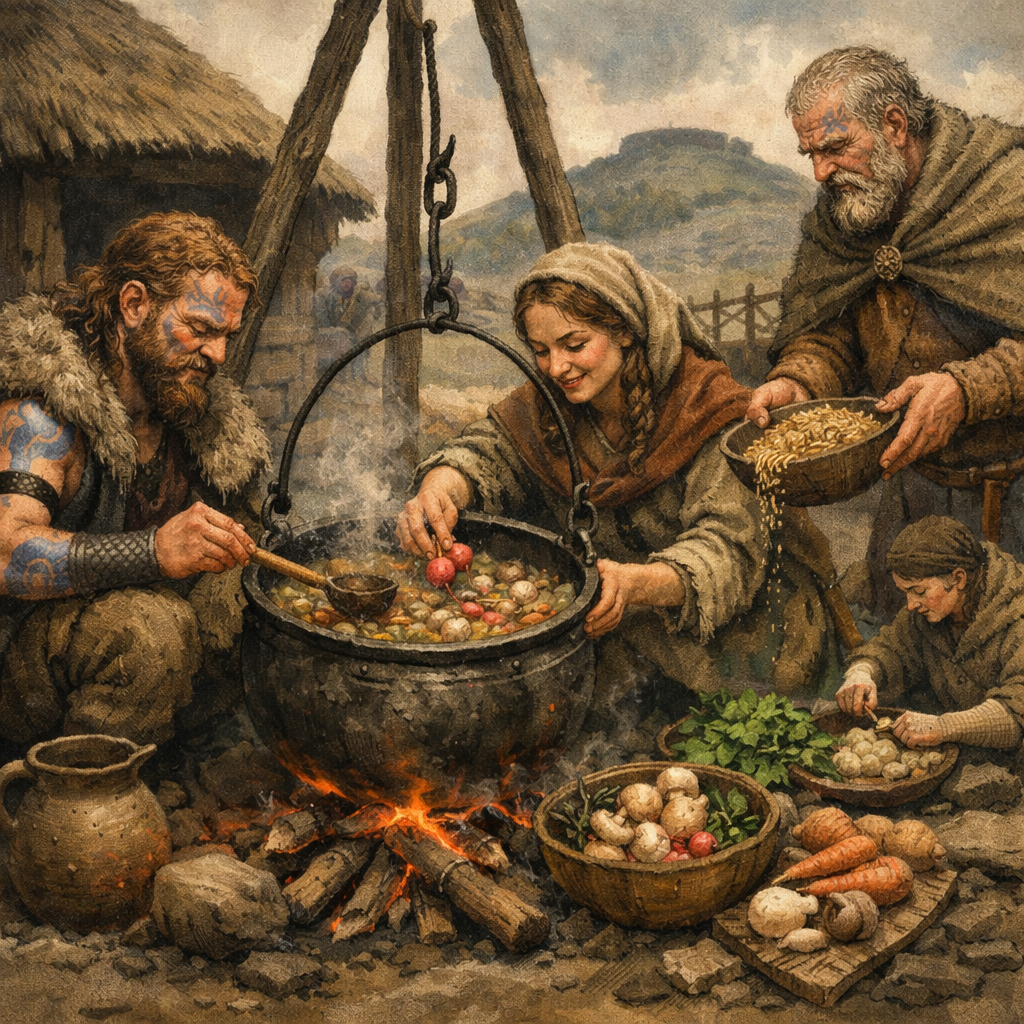
We know what you ate!
Archaeologists and chemists use organic residue analysis to scan ancient pottery for molecular traces, revealing ancient diets. By scraping charred remains, analyzing absorbed lipids (fats/oils), and testing for protein residues in ceramic pores, researchers have identified dairy consumption 7,400 years ago in Europe, fish stews from 14,000 years ago in Japan, and plant processing from 10,000 years ago in the Sahara.
How Pottery Reveals Ancient Diets
Organic Residue Analysis (Lipids): Scientists, such as those at the University of Bristol, identify fatty acids trapped inside clay pores to distinguish between animal fats, dairy, and plants.
Protein Residue Analysis: Testing mineral-rich "scale" inside pots can identify specific proteins from staples like barley, wheat, and peas.
Charred Food Deposits: Direct scraping of carbonized food remnants allows for the analysis of ingredients burned onto the pots.
Stable Isotope Analysis: By comparing carbon and nitrogen isotopes in the residues, scientists can determine if the food originated from land animals, freshwater, or marine environments.
Video Library Genetics and archeology working together.

Doctor Laura’s Dinosaurs!