Dave's how to Science the heck out of it, Tool Box .

Just for fun! Click on the button below for a tediously accurate scale of our solar system ,
Dave’s Favorites!


🌍🌋🌌 Haystead Global Monitoring Command
Environmental Intelligence • Atmospheric Observation • Astronomical Operations
From a quiet hill in Virginia, Haystead Research Ranch operates something far greater than a traditional homestead.
It operates a distributed environmental observation node.
Through an integrated network of weather stations, astronomical instruments, remote sensing platforms, and computational modeling systems, Haystead participates in the continuous monitoring of Earth and sky.
🌋 Global Volcanic Event Monitoring
Volcanic eruptions are among the most powerful planetary-scale events on Earth.
Major eruptions influence:
Atmospheric aerosol concentrations
Jet stream dynamics
Aviation safety corridors
Sunset coloration and sky transparency
Climate and agricultural conditions
Using global seismic reporting feeds, satellite imagery, atmospheric datasets, and lightning detection networks, Haystead tracks significant eruptions and their atmospheric consequences.
These observations inform:
Astronomical viewing conditions
Agricultural planning cycles
Atmospheric optical studies
Long-term environmental documentation
🌦 Integrated Weather Intelligence
Haystead’s on-site weather stations — V.I.N.C.E.N.T., B.O.B., and Maximilian — continuously collect and archive environmental data including:
Barometric pressure
Wind speed and direction
Temperature
Rainfall
Lightning detection and distance
Atmospheric trends
Local data provides the ground truth needed to interpret larger global phenomena.
🌌 Astronomical & Sky Transparency Monitoring
Ash and upper-atmospheric particulates from volcanic events can directly affect:
Deep-sky visibility
Stellar magnitude thresholds
Sky brightness readings
Noctilucent cloud behavior
Through telescope observations, Messier Marathon operations, and sky condition logging, Haystead tracks how global atmospheric changes influence astronomical performance.
🖥 Environmental Intelligence Center
The Haystead Environmental Intelligence Center integrates:
Computational modeling participation (Milky Way modeling initiative)
Data archiving systems
Atmospheric observation logs
Agricultural performance records
This cross-disciplinary approach allows Haystead to examine connections between:
Earth systems 🌍
Atmospheric science 🌦
Astronomy 🌌
Agriculture 🌱
🎯 Mission Objective
To operate a small but scientifically engaged environmental observation node that:
Tracks global geological events
Monitors atmospheric and astronomical impacts
Integrates local and global datasets
Encourages interdisciplinary curiosity
Haystead may sit on a hill in Virginia — but its perspective reaches around the planet and beyond it.
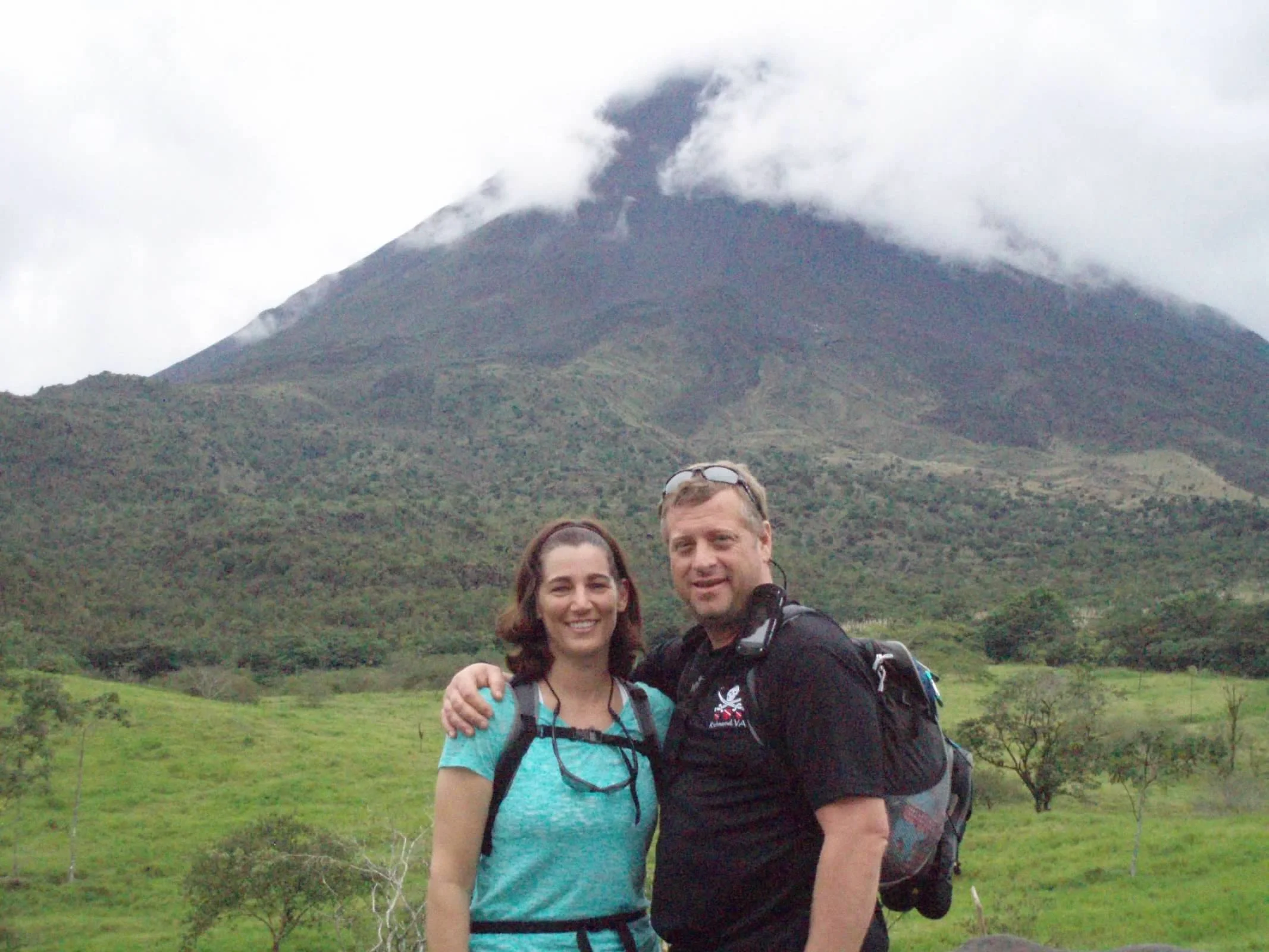
Looming over the town of La Fortuna, Arenal Volcano is one of Costa Rica’s five active volcanoes. Originally thought to be dormant, this volcano unexpectedly sprang to life in 1968. For 15 days, the mighty Arenal showed the world it was very much alive, spewing lava, rocks, and ash over 15 square kilometers. That catastrophic eruption, which killed 73 people and buried three towns, was Arenal’s biggest. Since then, Arenal has had smaller eruptions, though its activity has slowed considerably since 2010.

Playing now at the ….

Tracking International Space Station.
Worms Master Class


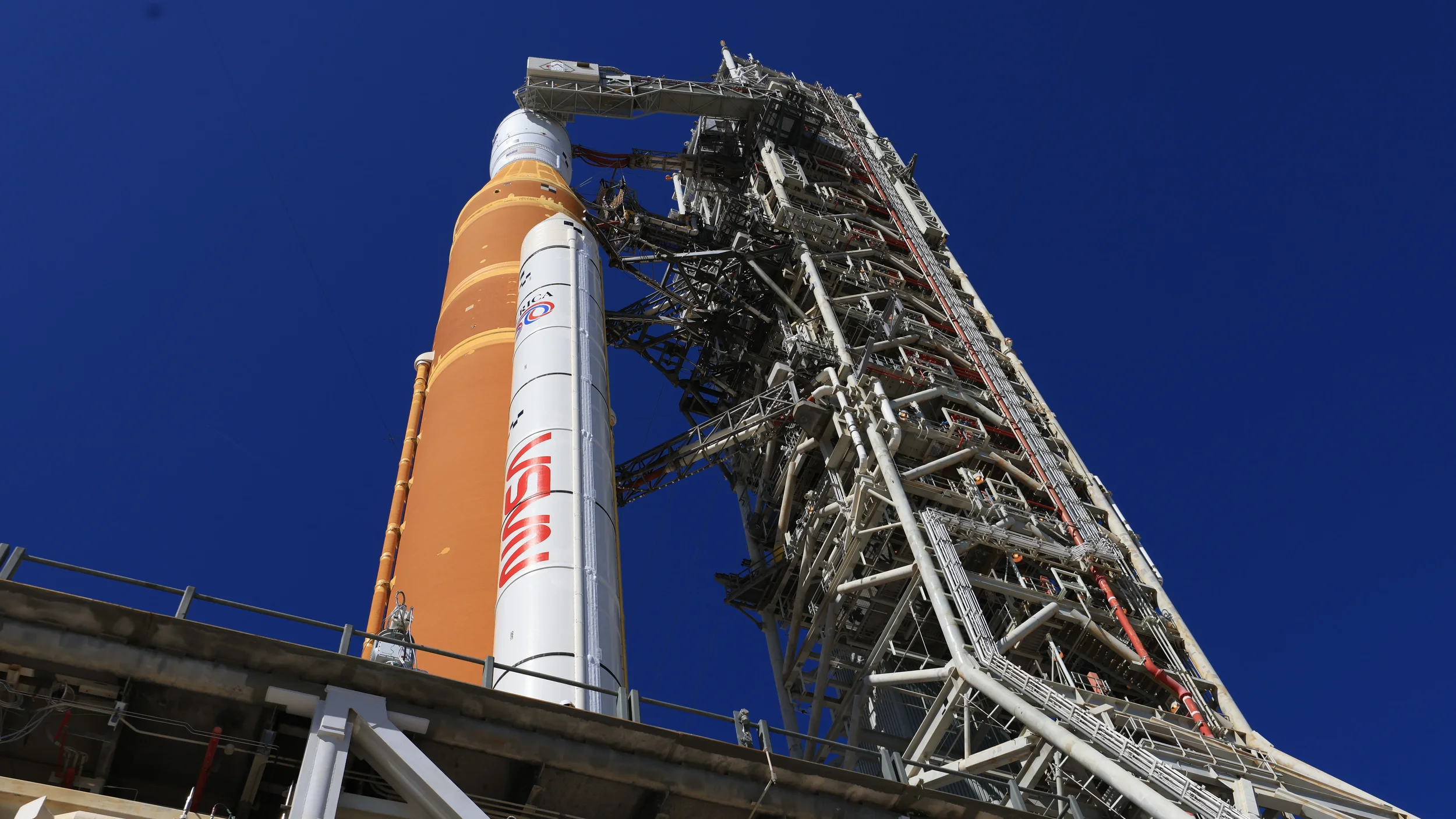
NASA’s Artemis II Mission Review
MISSION BRIEF
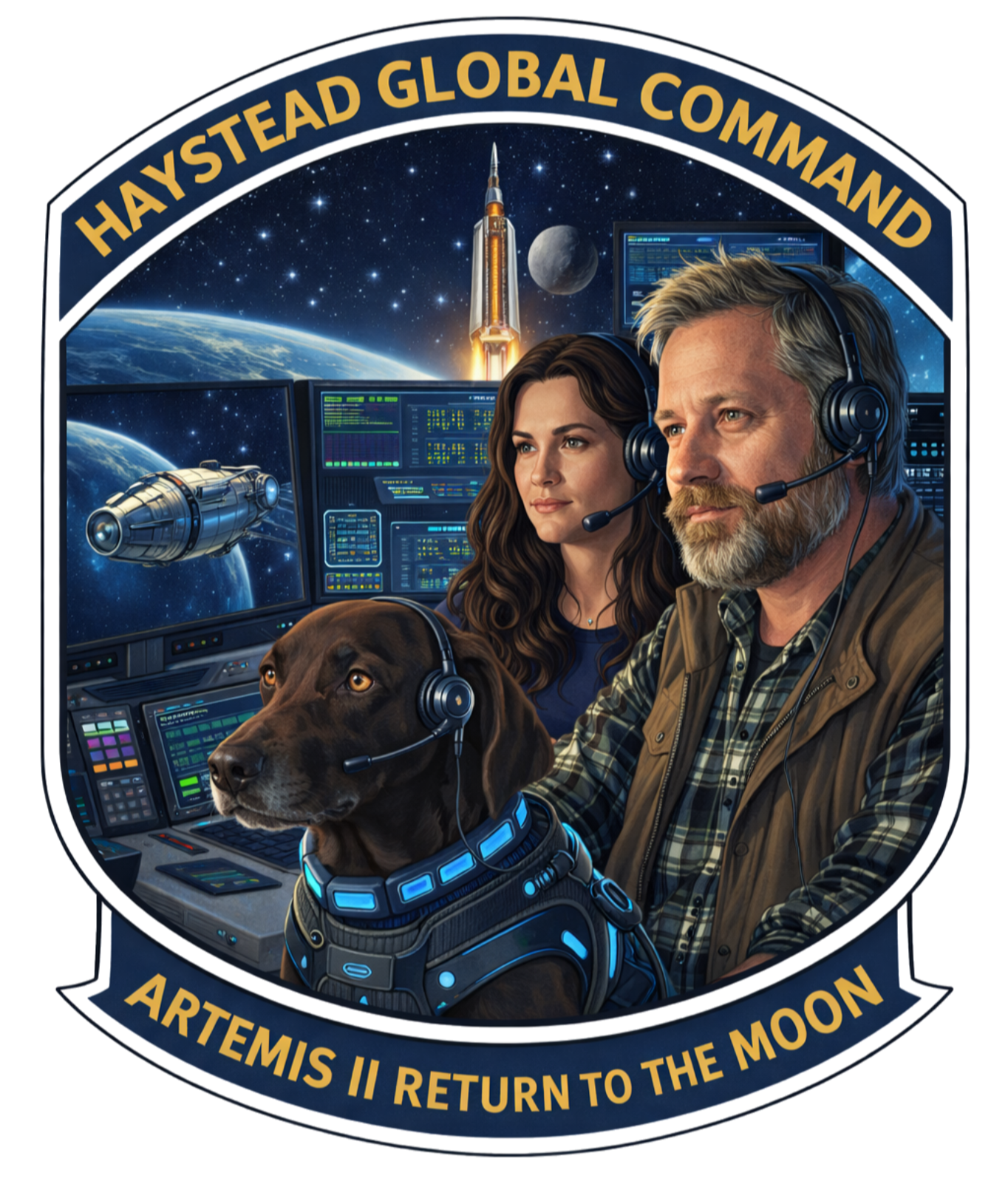
Haystead Global Command conducted continuous real-time monitoring of Artemis II from liftoff April 1st 2026 through lunar transit and return operations.
All mission phases were tracked and assessed, including telemetry, trajectory, and critical milestones, ensuring full situational awareness through splashdown and mission completion.
A Lifetime Moment! From Apollo to Artemis!
One month after I was born, in July 1969, humanity made history as the crew of Apollo 11 Moon Landing first set foot on the Moon.
Of course, I was too young to witness it.
But today, decades later, I had the incredible opportunity to watch a new chapter unfold live the launch of Artemis II.
It wasn’t perfect, seasonal allergies had me sounding more like a frog than a mission commentator, I was babbling and giddy and we had one monitor not going. But the moment itself was unforgettable.
Join us at Haystead Ranch as we experience this historic launch together, from our vantage point on the ground to humanity’s next steps back to the Moon.
Dave
🎥 Watch the video and be part of the journey.
Astronomer Ray dropping big knowledge on the Dome! Science Museum RVA
🚀 Artemis II
FINAL MISSION SUMMARY
🌕 April 1 – April 10, 2026
A Haystead Ranch Historical Archive Document
🌌 Mission Overview
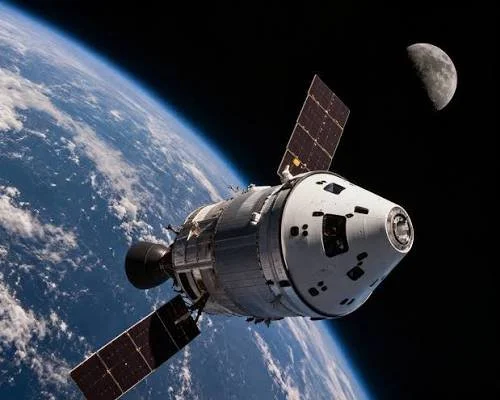
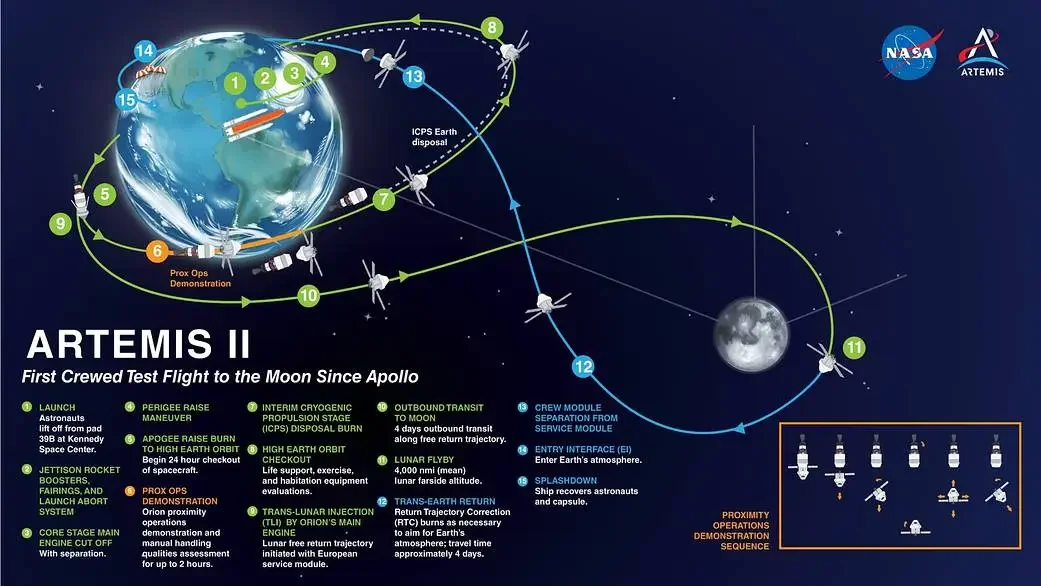
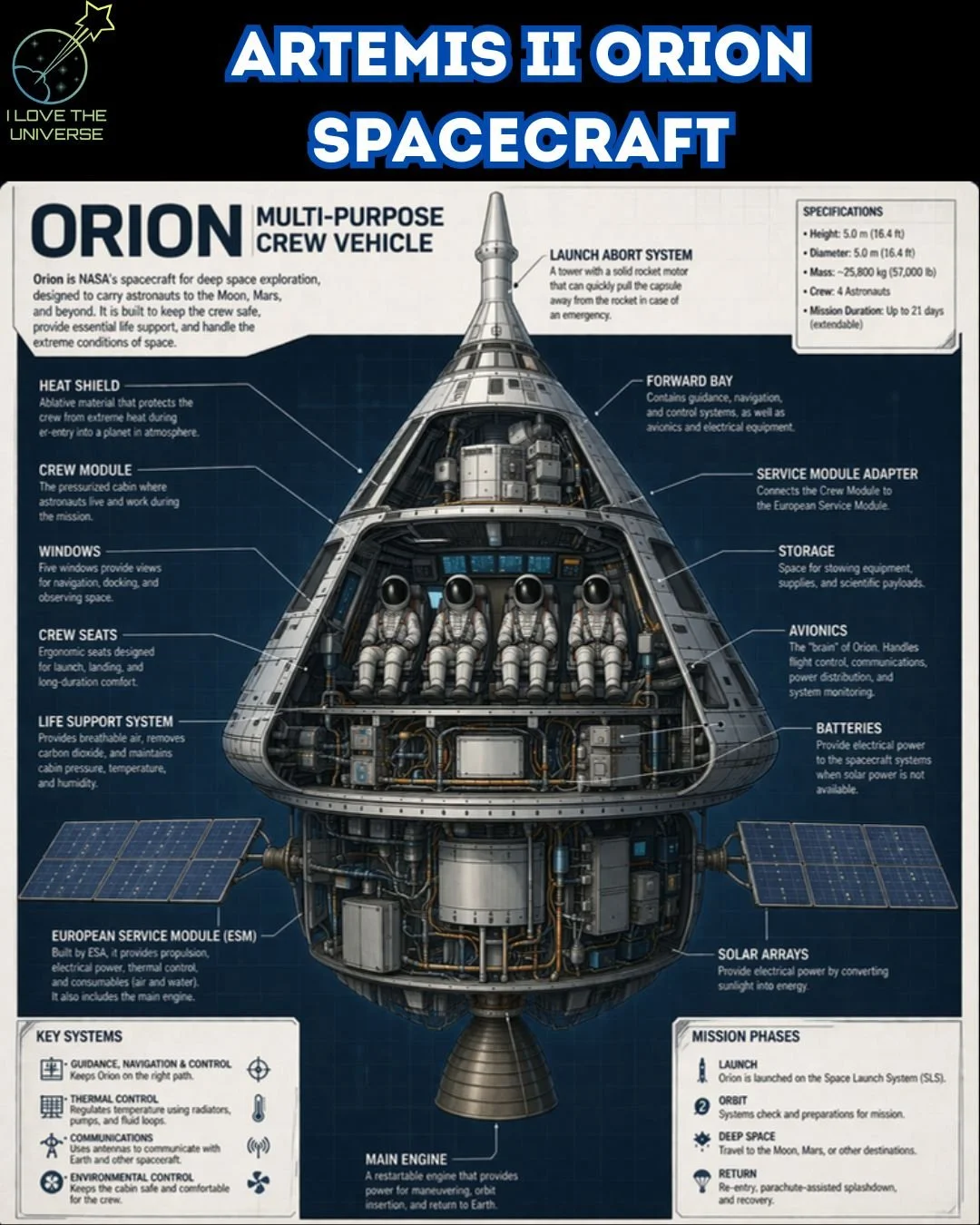
Artemis II marked humanity’s return to deep space with a crewed mission beyond low Earth orbit for the first time since Apollo program. Over the course of 10 days, the Orion spacecraft successfully carried astronauts on a free-return trajectory around the Moon and back to Earth—validating the systems that will enable future lunar landings.
📅 COMPLETE MISSION TIMELINE (ALL TIMES EST)
📅 April 1, 2026 — LAUNCH DAY
🚀 Mission Begins
🕒 ~10:12 AM — Liftoff of SLS rocket
🕒 ~10:20 AM — Solid Rocket Booster separation
🕒 ~10:28 AM — Core stage separation
🕒 ~10:30 AM — Orion inserted into temporary Earth orbit
Mission Highlights:
First crewed launch of SLS
All ascent phases nominal
Crew confirmed safe and stable
📅 April 1, 2026 — TRANSLUNAR INJECTION (TLI)
🚀 Commitment to the Moon
🕒 ~12:45 PM — Translunar Injection burn begins
🕒 ~1:03 PM — TLI burn complete
Mission Highlights:
Orion departs Earth orbit
Free-return trajectory established
Spacecraft officially enters deep space mission phase
📅 April 2, 2026 — EARLY TRANSIT
🌌 Deep Space Operations Begin
Continuous communications via Deep Space Network
Mission Highlights:
Stable spacecraft configuration achieved
Crew adapts to microgravity environment
Initial navigation solutions confirmed
📅 April 3, 2026 — MID-TRANSIT
🌌 Systems Validation Phase
Mission Highlights:
Ongoing spacecraft systems diagnostics
Crew health and environmental systems stable
Earth observation and imaging conducted
Communications remain strong and uninterrupted
📅 April 4–5, 2026 — TRANSIT PHASE
🌕 Approach to Lunar Sphere of Influence
Mission Highlights:
Spacecraft passes halfway point to the Moon
All systems nominal with only minor non-critical adjustments
Crew prepares for lunar flyby operations
Navigation refined for precision perilune targeting
📅 April 6, 2026 — LUNAR FLYBY OPERATIONS
🌕 Closest Approach to the Moon
⏱️ Key Events (EST):
🕒 ~12:40 PM — Far-side lunar approach begins
🕒 ~1:00–1:40 PM — Communications blackout (expected)
🕒 ~1:15 PM — Perilune (closest approach)
🕒 ~1:40 PM — Signal reacquisition confirmed
🕒 ~4:30 PM — Trans-Earth Injection (TEI) burn
Mission Highlights:
Orion passes behind the Moon
Communications blackout successfully executed
TEI burn places spacecraft on Earth-return trajectory
Critical navigation milestone achieved flawlessly
📅 April 7, 2026 — RETURN TRANSIT BEGINS
🌍 Departure from Lunar Vicinity
Mission Highlights:
Stable return trajectory confirmed
All post-flyby systems operating nominally
Crew begins extended-duration system evaluations
Imaging of lunar departure and deep space environment
📅 April 8, 2026 — DEEP SPACE RETURN
🌌 Sustained Operations in Deep Space
Mission Highlights:
Continuous telemetry confirms system health
Life support systems validated over extended duration
Navigation alignment remains precise
Earth grows visibly larger in crew observations
📅 April 9, 2026 — EARTH APPROACH REFINEMENT
🌍 Precision Reentry Targeting
⏱️ Key Events (EST):
🕒 ~07:30–09:00 AM — DSN tracking pass
🕒 ~10:30 AM–1:30 PM — Trajectory Correction Opportunity
🕒 ~01:00–02:30 PM — Midday tracking pass
🕒 ~07:30–09:00 PM — Final DSN pass
Mission Highlights:
Minimal trajectory correction required
Reentry corridor alignment highly accurate
Final system checks completed
Crew prepares for atmospheric return
📅 April 10, 2026 — REENTRY & SPLASHDOWN
🌍 Mission Culmination
⏱️ Key Events (EST):
🕒 ~07:35 PM — Entry Interface (~400,000 ft)
🕒 ~07:38–07:44 PM — Plasma blackout & peak heating (~5,000°F)
🕒 ~07:41 PM — Maximum deceleration (peak G-forces)
🕒 ~07:45 PM — Drogue parachutes deploy
🕒 ~07:48 PM — Main parachutes deploy
🕒 ~08:07 PM — SPLASHDOWN (Pacific Ocean)
Mission Highlights:
Successful high-speed reentry
Heat shield performance validated
Parachute systems deploy flawlessly
Safe ocean landing and recovery operations initiated
🧠 FINAL MISSION ASSESSMENT
🚀 End-to-End Mission Success
From launch to splashdown, Artemis II achieved all primary objectives:
✔️ Crewed deep space flight validated
✔️ Orion spacecraft performance confirmed
✔️ Life support systems proven for extended missions
✔️ Navigation beyond Earth orbit demonstrated
✔️ Lunar flyby executed with precision
✔️ Safe Earth reentry and recovery completed
🌕 Historical Significance
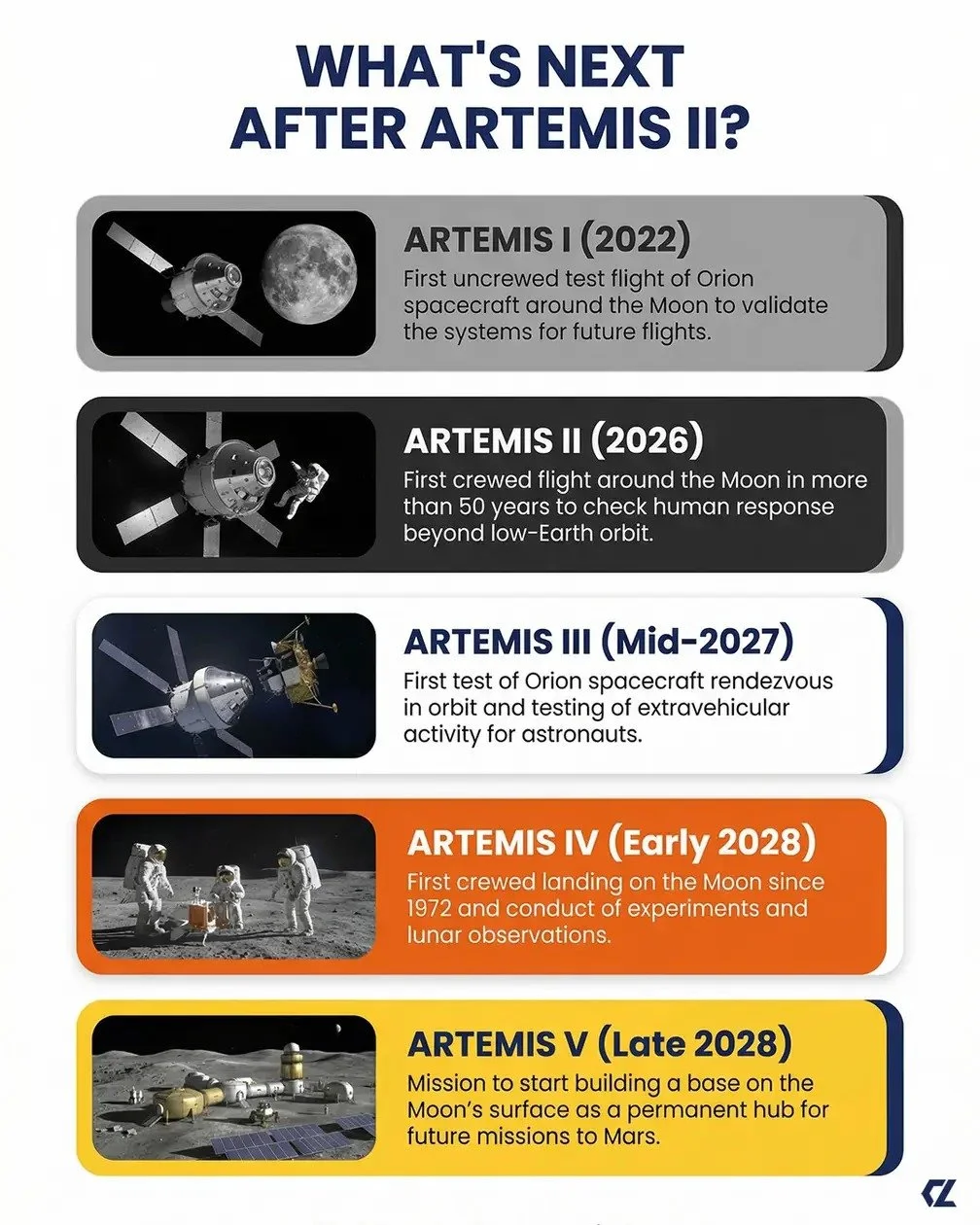
First crewed mission beyond low Earth orbit in over 50 years
Critical stepping stone toward Artemis III lunar landing
Demonstrates sustained human capability in deep space
🌍 Mission Legacy
Artemis II stands as a defining milestone in modern space exploration—bridging the gap between past achievements and future lunar presence.
Through precision engineering, disciplined execution, and human courage, this mission has:
Reestablished human presence in deep space
Proven the systems that will carry astronauts back to the lunar surface
Advanced the broader goals of NASA’s Artemis Program
🚀 HAYSTEAD RANCH TRIBUTE STATEMENT
From Haystead Command to the Artemis II Crew:
From liftoff to splashdown, we tracked your journey every step of the way.
You carried not only instruments and systems—but the hopes of a new generation of explorers.
🌕 Because of this mission, the path back to the Moon is no longer a plan—
🚀 It is a proven reality.